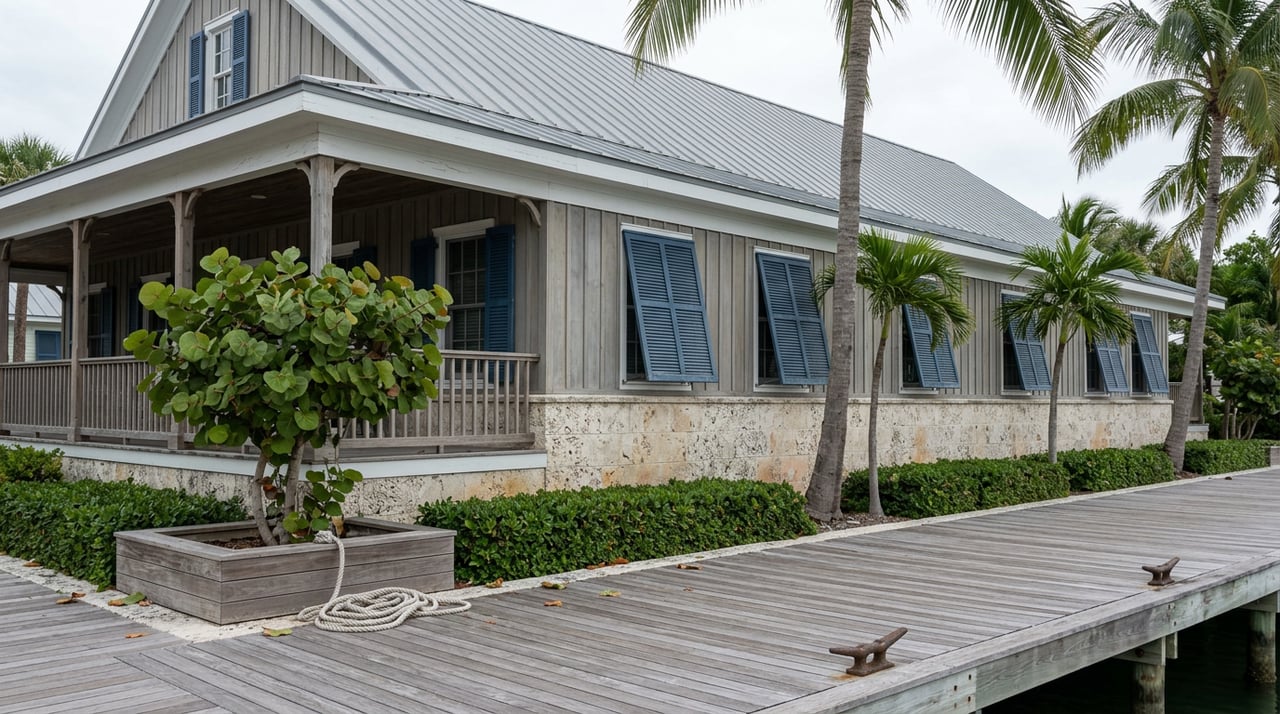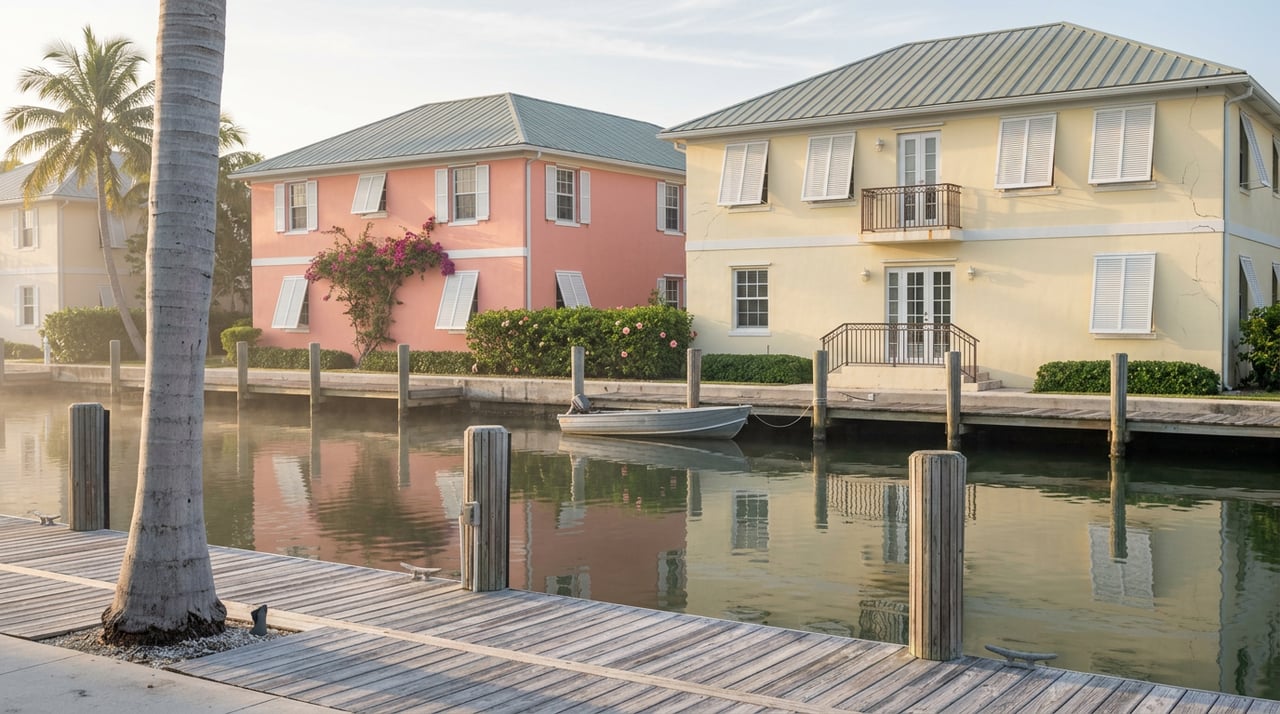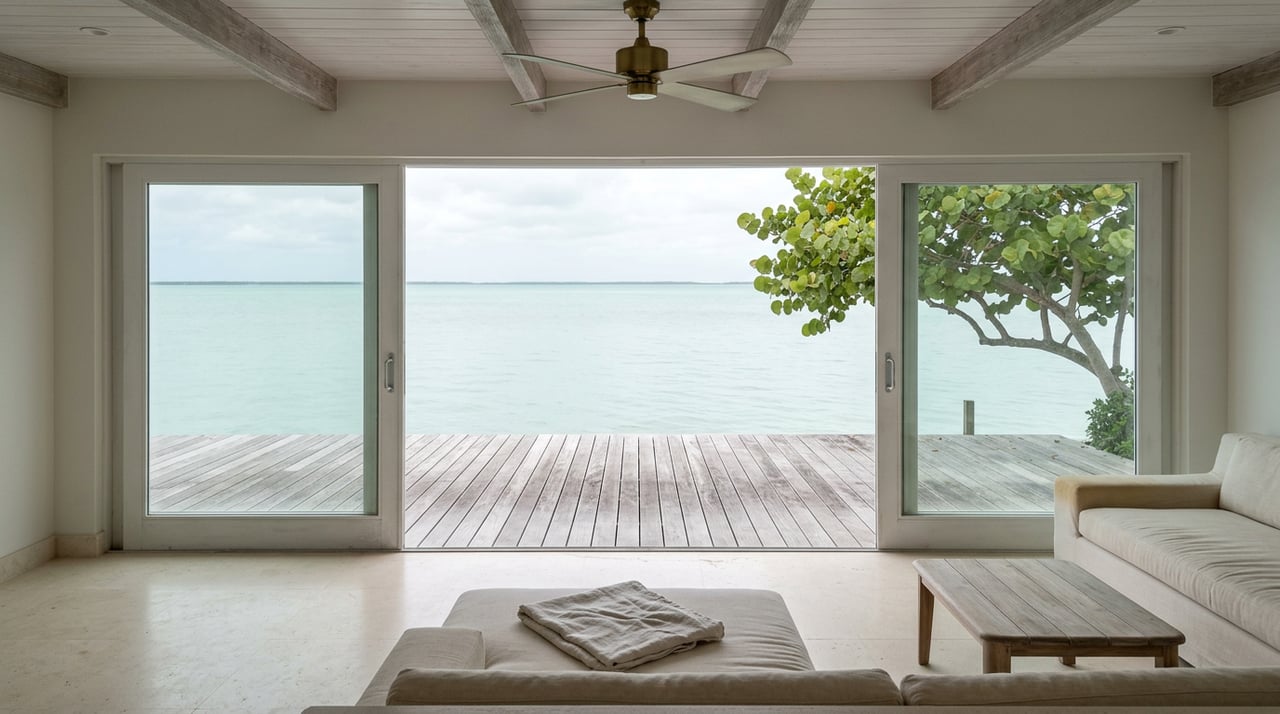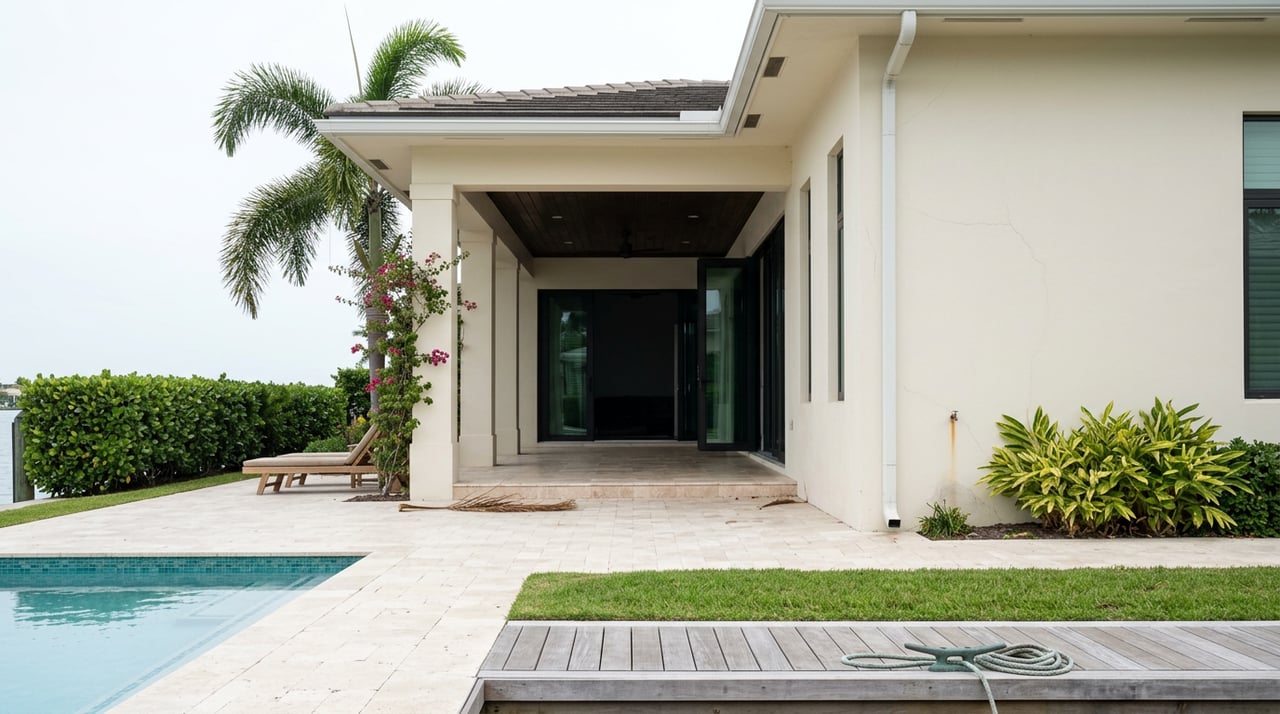
Residents on Green Turtle Cay didn't find out about the nine villas until they saw the survey stakes. By the time a Town Hall meeting was called on July 16, 2026, the developer already held a government clearance to build a clubhouse with a restaurant and bar, an administrative office, and back-of-house facilities on Gillam Bay, a stretch of shoreline most of the island had treated as a public beach for years. The broader Green Turtle Cay community first learned the full scope of the proposal during a town meeting held on July 16, 2026. The permit had already been signed months earlier.
That sequence, approval first, awareness second, is the part of this story that matters if you're shopping for land anywhere in the Family Islands. Everyone doing due diligence on a Bahamas parcel already checks the price per acre and the dock permit status. Fewer people check what actually triggers a full environmental review versus what lets a project skip one. Gillam Bay just made that distinction concrete, in public, in real time.
The Clearance Nobody Contested Until It Was Too Late
The developer behind the project, Reginald Curry, sought approval to build nine 1,900-square-foot villas on roughly three acres of Crown land at Gillam Bay. The Department of Environmental Planning and Protection granted the project a certificate of environmental clearance on April 22 after completing the required baseline assessment and management plan. No public notice period. No comment window for residents. The clearance moved through the system the way most Bahamian coastal projects do, quietly, on paper, before a shovel ever hits the sand.
When residents finally asked why a project this close to wetlands and a working bird colony didn't require a full Environmental Impact Assessment, the answer from DEPP was procedural, not ecological. A department official explained that the proposal did not meet the threshold for an EIA because it involves construction on pilings rather than major excavation, mining or marine works. Build on stilts and you clear a lower bar. Dredge or excavate the same acreage and you don't.
That's the mechanism. It's not a judgment about whether Gillam Bay can absorb nine villas and a restaurant without damage. It's a classification based on how the foundation gets poured.
A Technicality Wearing the Costume of a Decision
Eric Carey ran the Bahamas National Trust before starting his own environmental consultancy, and he wasn't persuaded by the pilings distinction. He called DEPP's determination "kind of strange" for virgin land, an area used by lots of shore birds and wildlife over the years, and said he found the determination "somewhat deficient". Part of what bothered him was the land itself: Gillam Bay is newly-accreted land from the accumulation of coastal sand, with a reputation as a haven for birds and other wildlife and use for recreation by locals, the kind of shifting, ecologically active shoreline that usually invites more scrutiny, not less.
Former Prime Minister Hubert Ingraham, who represented North Abaco for decades, made the same point from a different angle. He argued the least DEPP should have done was conduct an EIA and make it public so residents and other stakeholders could provide comment and feedback before the development is cleared to proceed. Neither Carey nor Ingraham is arguing the project should be blocked outright. Both are arguing the classification let a substantive question, is this the right place for this, get answered by a procedural test that was never designed to answer it.
That gap between what a clearance certifies and what a buyer assumes it certifies is the actual risk. A CEC tells you a developer cleared a specific regulatory bar. It does not tell you the community agrees, or that the approval is politically permanent.
Cleared on Paper. Reversed by a Vote.
Here's where the story stops being about permits and starts being about land tenure. All five members of the Green Turtle Cay District Council voted against the Gillam Bay proposal, citing overwhelming community opposition and concerns over the long-term preservation of one of the Cay's last undeveloped public coastal areas. The project already had its environmental clearance. The council vote didn't undo that clearance. What it did was formalize a request that goes over DEPP's head entirely.
Deputy chief councillor Elvardi Butler put the mechanism plainly: "It's owned by government, and if government wishes, they could somehow take the property back and leave it for the future of Green Turtle Cay and The Bahamas." The council has now formally requested a meeting with Prime Minister Philip Davis, and council member Giselle McIntosh confirmed reversing the Crown Land grant is the objective, with the goal of having Gillam Bay deemed a national park or preserve, since he's ultimately the only person that can reverse the grant.
Sit with what that means for anyone underwriting a Family Island land purchase. A Crown Land grant that clears every environmental box can still be unwound by executive discretion if local political pressure builds fast enough. The environmental clearance process and the political durability of a land grant are two entirely separate risks, and only one of them shows up in a permit file.
By early August, the fight had escalated further. Save Exuma Alliance issued a public statement warning that the DEPP decision threatens to further undermine transparency and trust in regulatory processes, noting that more than 1,500 people have signed a petition seeking to protect Gillam Bay, calling the site a place of extraordinary natural beauty and significant ecological importance.
The Bahamas Has Run This Play Before
None of this is unprecedented, which is exactly why it's useful. Gillam Bay is drawing comparisons to the fight over Baker's Bay Golf & Ocean Club on Great Guana Cay two decades ago, a dispute that ignited one of the most contentious land-use battles in modern Bahamian history and evolved into a national conversation about environmental stewardship, public access to beaches, dredging, foreign investment, and the rights of local residents. The outcome is the part buyers should pay closest attention to: although the project ultimately moved forward, it changed the way many Bahamians viewed major coastal developments.
That's the pattern. Community opposition rarely stops a Crown Land project outright. What it reliably does is extend the timeline, attach political risk to the parcel, and shape how neighboring land gets perceived by the next generation of buyers, whether that opposition succeeds or not.
What This Means If You're Looking at Land in Abaco
Green Turtle Cay's for-sale inventory right now includes finished homes priced roughly between $1.3 million and $1.7 million, alongside undeveloped waterfront acreage, including a parcel of more than 60 acres with deep-water access marketed for marina-scale development. Neither of those numbers tells you anything about regulatory exposure. The Gillam Bay situation does, and it points to three questions worth asking before you commit to any undeveloped or Crown-adjacent parcel in the Family Islands:
Did the project clear an EIA threshold, or avoid one? Ask specifically whether a CEC was issued on the basis of a baseline assessment alone, versus a full Environmental Impact Assessment. The first is a lighter-touch review triggered by construction method. The second involves public consultation and a higher bar for approval. A seller or developer should be able to tell you which pathway applied and why.
Is the underlying land Crown-granted, and how recently? Crown Land grants carry a different risk profile than freehold title. As Gillam Bay shows, the same government body that grants the land can, under enough pressure, be asked to take it back. That doesn't make Crown-adjacent land uninvestable. It means the political sentiment around the parcel matters as much as the paperwork.
What does the local council actually think? A portal listing won't tell you if a district council voted 5-0 against a neighboring project, or whether a petition against it just crossed a few thousand signatures. That information lives in local reporting and Town Hall minutes, not MLS data. On a market as thin as Green Turtle Cay's, where the short-term rental supply sits at just 49 active listings generating roughly $31,710 a year at 31 percent occupancy, one contested project can shift how the whole island is perceived by the next wave of buyers.
None of this means don't buy in Abaco. It means read the file the way the Gillam Bay fight is teaching an entire island to read it: what got approved, on what basis, and whether the approval is likely to survive contact with the people who live there.
FAQ
Does a Certificate of Environmental Clearance mean a project is guaranteed to move forward? No. A CEC certifies that a developer met DEPP's baseline requirements. It does not bind a district council's support or protect against a Crown Land grant being reconsidered at the political level, as is currently happening at Gillam Bay.
How can I find out if a specific piece of land triggered or avoided a full EIA? Ask directly, in writing, whether DEPP required a baseline assessment and environmental management plan versus a full Environmental Impact Assessment, and request the classification reasoning. The distinction generally comes down to construction method, pilings versus excavation, dredging, or marine works.
Is buying near Crown Land riskier than buying freehold? It carries a different kind of risk. Crown Land grants originate with, and can in theory be revisited by, the government that issued them. That doesn't make the land a bad investment. It means local sentiment and council-level opposition are worth researching before you close, not after.
If you're weighing a parcel in Abaco, Green Turtle Cay, or anywhere else in the Family Islands where the paperwork looks clean but the local sentiment is an open question, that's exactly the kind of diligence The Agency Bahamas runs before a client signs anything. We track these fights as they unfold, not after the fact. Contact the team now to talk through what a specific Abaco parcel actually carries in risk, or explore the wider Abaco market before you decide where to look next.